Module 2: Intro to Evolutionary Ecology
Module Summary
This module connects evolutionary biology with ecosystem dynamics, exploring how species interact with their environments, establish niches, and drive biological invasions. Students will examine key ecological behaviors - such as habitat selection, movement, and migration - alongside the impacts of human activity. By framing contemporary ecological patterns through the lens of evolutionary history, the module prepares students to apply these core concepts directly to this semester’s research projects.
Week 1 - Foundations in Evolutionary Biology
Class Date: September 22, 2026
Instructors: Caleb Charpentier, Josef Uyeda
Recording from 9/22 synchronous session
Lesson Summary
This lesson explores the connection between evolutionary biology and ecological research, with a focus on project themes for this semester. It delves into how phylogenies, which represent the evolutionary relationships between species, can be applied to study biodiversity. Additionally, the lesson addresses the potential for phylogenies to confound ecological questions if not properly considered, while also highlighting how they can be leveraged to design more effective ecological studies. Through these concepts, students will gain a deeper understanding of how evolutionary history informs ecological research.
Learning Objectives
At the end of this module, students will be able to:
- Differentiate between Phylogeny and Taxonomy.
- Understand how the assumptions of traditional comparative methods are similar to or different from AI methods.
- Describe how Phylogenetic Comparative Methods (PCMs) can be applied to biodiversity studies at various geographic and temporal scales.
- Analyze ecological data in light of phylogenetic or other sources of evolutionary confounding.
- Create new ‘tree-thinking’ approaches for studying biodiversity data with AI models.
Pre-Lecture Activities and Reading
due by 2pm ET on Tuesday, September 22
Watch
Read
- Phylogenies and the Comparative Method
- Divergence time and environmental similarity predict the strength of morphological convergence in stick and leaf insects
Complete
-
Please fill out this pre-lesson survey by Monday, September 21 at 2pm ET to help guide Tuesday's in-class discussion.
Part 1 (Explore)
- Step 1: Go to the Species Map Explorer website and click the ‘Clear All’ button in the left sidebar.
- Step 2: Under ‘Advanced options’, change ‘Number of examples (per species)’ from 1000 to 50.
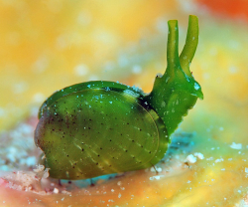
- Step 3: In the ‘Scientific or common name’ field, search for an animal species that interests you. Click ‘add’. (Instructor Caleb's favorite species is Julia exquisita, a small sea slug with a bivalved shell).
- Step 4: Press the
 location icon on the block for your species to center the map around its geographic range. In the upper right corner of the map, under the ‘Visual properties’ dropdown, click the ‘Biogeography’ dropdown, and then click ‘Biomes’.
Part 2 (Discuss)
- Prompt: Include, the name of your species of interest and describe some of its visible traits. You can open the ‘Species Gallery’ to see example images of your species from iNaturalist. Traits might include body structures, colors, patterns, shapes, or any other visible features that get your attention.
- Choose at least one trait and consider whether it might be adaptive. Why do you think this trait is present? Briefly explain how the trait might help the species survive, reproduce, or interact with its environment. If you do not think the trait is adaptive, explain why.
- Are traits always adaptive/not adaptive?
- Click the ‘Taxonomy’ button. On the menu that appears, you can add species that are taxonomically close to your chosen species up to the family level. Try adding the Genus for your species (if your species is the only one in its genus, try the next available taxonomic level). Find the new species on the map, and look at them in the Species gallery. Do they live in similar habitats to the first species, or have similar traits?
- If species live in the same habitat but have different traits, what does that imply about the traits? If they live in different habitats but have similar traits, what might be implied then?
- Briefly consider how AI tools like BioCLIP 2 might be used to address these comparative questions.
- Respond to at least one other discussion post.
Post-lecture Assignment
due by 2pm ET on Tuesday, September 29
- Journal Entry
- Prompt: Think about one of the course project themes that interests you. Are there ecological questions within that theme where ignoring evolutionary history could mislead your findings? If so, how might you account for evolutionary relationships in your project design?
Class Session Office Hours
Who: Caleb Charpentier
Date: Thursday, September 24
Time: 2pm ET
Zoom: Office Hour Zoom Link
Week 2 - Niches and the Dynamics That Shape Them
Class Date: September 29, 2026
Instructors: Dan Rubenstein, Sydne Record
Recording from 9/29 synchronous session
Lesson Summary
This lesson provides a comprehensive exploration of ecological niches and the factors that make certain plants and animals invasive. Key topics include species interactions with their environment, habitat choice, movement, and migration patterns. Students will learn how technologies such as camera traps, drones, and satellites are used to detect and monitor wildlife. The module also covers the significant human impacts on ecosystems, such as climate change and land use alterations, and how these changes can be tracked over time and across different regions. Through these topics, students will gain a deeper understanding of ecosystem dynamics and the challenges posed by both invasive species and human activities.
Learning Objectives
At the end of this module, students will be able to:
- Understand the fundamentals of ecological niches, including how species interact with their environment and each other.
- Identify the key characteristics that contribute to the invasiveness of plants and animals, such as adaptability, reproduction rates, and competition with native species.
- Understand how niches relate to species coexistence.
- Have an appreciation for how AI/ML may help to capture information related to species niches.
Pre-Lecture Activities and Reading
Watch
Readings
- Let the concept of trait be functional! (internal, https://doi.org/10.1111/j.0030-1299.2007.15559.x)
- Among‐species overlap in rodent body size distributions predicts species richness along a temperature gradient
Practice
due by 2pm ET on Tuesday, September 29
- NEON Small Mammal Exercise (download the pdf and go over pp. 1-21)
Consider
As you read through this week's research articles consider the following questions and be prepared to discuss them during Tuesday's class:
-
Why is understanding the features that characterize fundamental and realized niches and their differences important?
-
How are niches related to functional traits?
-
Niches define the multidimensional similarities and differences among species in needs and ecologies. How do functional tradeoffs facilitate niche separation and species coexistence in species-rich communities?
-
Are niches features of species that are fixed or flexible? In a similar vein, are functional traits fixed or plastic?
-
How might machine learning, AI and computer vision algorithms help determine niches (ecological similarities and differences) and functional traits from videos of behavior and images of organisms, locations, and habitat features?
Post-class Assignment
-
- Prompt: Reflecting on this week’s lesson, pick one of the semester project themes that interests you most. How does the concept of ecological niches apply to this theme in the context of the relevant ecosystem? What is one challenge or question within this theme where combining field observations with field tech tools (like camera traps, drones, satellites) and AI could help us measure or monitor these dynamics more effectively?
-
Optional: Learn how to calculate the overlap metrics (O-stats) from the small mammal exercise with NEON data with this Ostats R package vignette
Class Session Office Hours
Who: Alyson East
Date: Thursday, September 30, 2026
Time: 2pm ET
Zoom: Office Hour Zoom Link